Your Intranet Is Not the Problem. Your Mental Model of It Is.
Why the next generation of enterprise intranets won't look anything like the last one, and what that means for how your organization works.


Every few years, the enterprise intranet gets a makeover. A new platform. A cleaner interface. A better search bar. And yet, despite the upgrades, the complaint stays the same:
“No one uses it.”
This frustration is universal. Digital workplace leaders invest in platforms, governance frameworks, content strategies, and change management campaigns, and still find that employees route around the intranet rather than through it.
Here's the uncomfortable truth: the problem isn't the platform. It's the paradigm.
We have been building intranets based on how organizations want to communicate top-down, structured by department, indexed by topic. But that's not how people work. People work in context. They work around projects, customers, products, regions, and goals. And when the intranet doesn't reflect that context, it becomes just another tab to close.
The Intranet Was Built for a Different Era
Cast your mind back to the early 2000s. The intranet was an extraordinary innovation: a single internal website where employees could access company news, policies, org charts, and HR forms. It replaced the printed employee handbook and the bulletin board. For its time, it was transformational.
But the world of work has changed beyond recognition. The average enterprise today relies on 11 or more applications every day - CRMs, project management tools, financial systems, HR platforms, communication apps, customer support software, and more. Information isn't just on the intranet. It's everywhere.
The result? Employees spend up to 9% of their workweek searching for information. 71% experience digital friction daily. Not because they're inefficient but because the architecture of how information is organized simply hasn't kept up with the architecture of how work actually gets done.
Think about what happens when a sales manager prepares for a quarterly business review. She needs customer revenue data from the CRM, pipeline status from the forecasting tool, open support tickets from the help desk, project updates from the project management system, and team performance from the HR platform. None of this lives in the intranet. So, she spends hours assembling a picture that should already exist.
This is the hidden tax of the modern enterprise - the cost of context-switching, information hunting, and manual assembly. It's invisible on the balance sheet but enormous in its impact.
The Shift from Channels to Context
The next generation of intranets won't be defined by better content management. They'll be defined by contextual intelligence, which is the ability to surface the right information, in the right structure, organized around the things that actually drive your business.
What does that mean in practice?
Consider how your organization actually runs. It runs on entities such as customers, products, markets, teams, vendors, office locations, and more. These are the atoms of your business. Every strategy, decision, and action maps back to one or more of them.
Now imagine a digital workplace that's organized around those entities and not around departments or document categories. Imagine that when you open a customer record, you don't just see contact information. You see their revenue history from your financial system, their open support tickets from your helpdesk, their project status from your project management tool, and their recent communications from your CRM. All in one structured, consistent view. No tab-switching. No manual data assembly. Just complete context, instantly accessible.
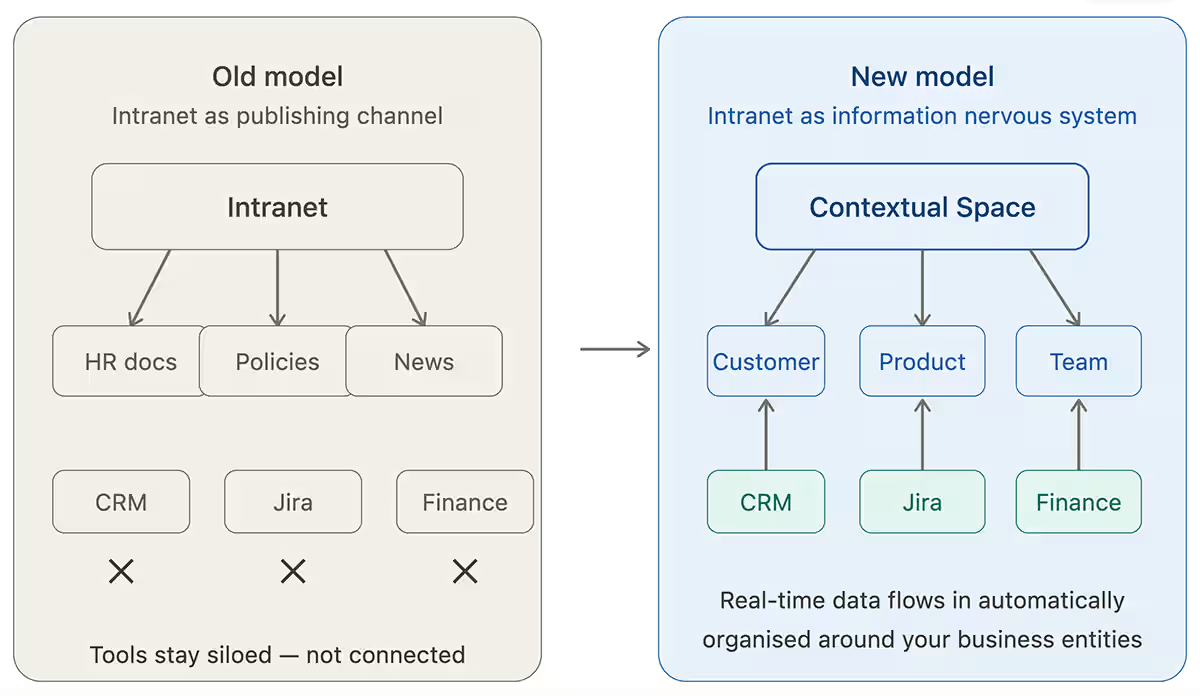
This is the paradigm shift. From the intranet as a publishing channel to the intranet as an information nervous system.
What an Information Nervous System Actually Does
The human nervous system doesn't store every piece of information centrally. It routes signals intelligently, delivering what's needed to where it's needed, at the speed the body requires. An enterprise information nervous system works on the same principle.
Rather than asking employees to search across tools, it pulls dynamic, real-time data from across your entire technology stack and presents it through a consistent, entity-centred structure. The key properties of this architecture:
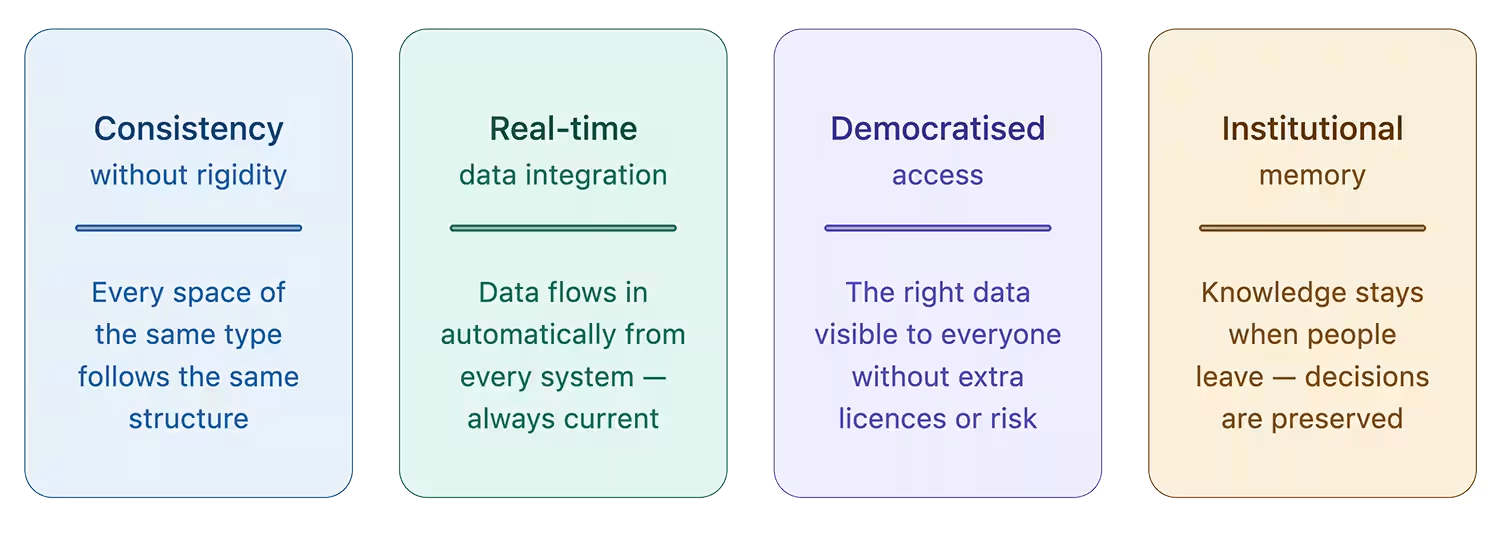
- Consistency without rigidity. Every customer page, every product page, every team page follows the same structure. This means employees don't have to learn where things are when they switch between records. The familiarity accelerates productivity.
- Real-time data integration. Information flows automatically from source systems such as your CRM, ERP, HRMS, project tools, and communication platforms. As a result, what employees see is always current. No stale reports. No manual updates.
- Democratized access. Not everyone needs (or should have) full access to every enterprise tool. But everyone needs visibility into certain data. An information nervous system surfaces that data in context, without expanding costly licenses or creating security risks.
- Institutional memory. When structure is consistent, and data is centralized, knowledge doesn't leave when people do. Decisions, context, and history are preserved, making onboarding faster and institutional knowledge durable.
To ground this in reality: one fast-moving operations team implemented this model and immediately found that new team members became productive in days rather than weeks because every project, customer, and workflow followed the same familiar structure. The intranet stopped being a place they visited and became the environment in which they worked.
Why This Matters Now More Than Ever
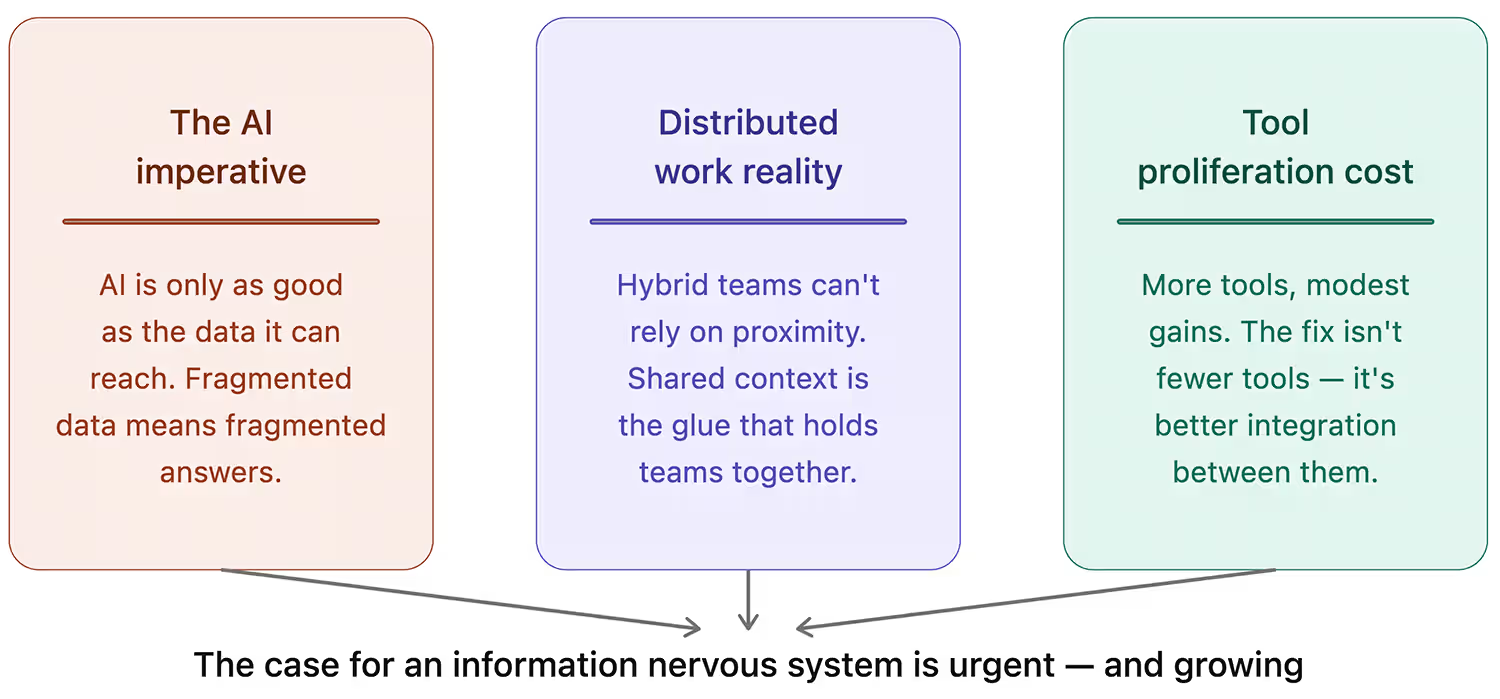
Several converging forces are making this shift not just desirable, but urgent.
The AI imperative
AI tools are only as good as the information they can access. If your data is fragmented across a dozen siloed systems, AI cannot deliver coherent, contextual answers. Building an information nervous system creates the structured, integrated data layer that makes AI genuinely useful at the enterprise level rather than just a smarter search bar on top of a messy filing system.
The distributed work reality
Hybrid and distributed teams have fundamentally changed how information needs to flow. When teams can't colocate, shared context becomes the glue that holds organizations together. Without it, people default to their own siloed systems, tribal knowledge grows, and alignment erodes. A well-architected information nervous system replaces proximity-dependent knowledge sharing with something more scalable.
The cost of tool proliferation
Enterprise tool spending has ballooned, yet productivity gains have been modest. The culprit is often not the tools themselves but the lack of integration between them. Consolidating data visibility (not just tool access) through an information nervous system can reduce friction, improve tool ROI, and even trim unnecessary licenses. This is because teams can get the data they need without needing full access to the underlying systems.
The Reimagined Intranet in Practice
What does this actually look like when it's working well? Here are three scenarios that illustrate the difference contextual architecture makes:
Before a client meeting
Old model: Sales rep spends 45 minutes pulling together slides for CRM data, last meeting notes, open support issues, contract value, renewal date, and more.
New model: Rep opens the customer's contextual space two minutes before the meeting. Everything is already there - current pipeline status, last three interactions, open issues flagged, and contract renewal timeline. The preparation time is near zero. The quality of the conversation is dramatically higher.
Running a weekly team meeting
Old model: Team lead spends Sunday evening building a status deck by manually pulling project updates, financial performance, team capacity, and upcoming leave.
New model: The team opens their Team Space at the start of the meeting. HR data shows who's on leave. Project tools show status at a glance. Financial data is current. The meeting starts immediately on what matters: decisions, not data collection.
Onboarding a new employee
Old model: New hire spends weeks asking colleagues where things are, getting access to systems, understanding how the business is organized, often without a consistent guide.
New model: Every space the new hire needs to engage with follows the same familiar structure. Whether they're looking at a customer, a product line, or a regional market, the layout is consistent. Structural familiarity accelerates context and context accelerates contribution.
A Note for Digital Workplace Leaders: The Architecture Question
If you're attending Intranet Reloaded this year, you'll likely hear a version of a familiar debate: SharePoint versus Confluence versus homegrown solutions. Which platform is best?
But here's what the most forward-thinking digital workplace leaders already understand: the platform is a foundation, not a strategy. The question that matters isn't which platform. It's what architecture you build on top of it.
The organizations that will win the next decade of the digital workplace aren't the ones who choose the best platform. They're the ones who design the information architecture that's built around how the business actually works, integrates the full stack of enterprise tools, and makes context the default rather than the exception.
That's the conversation worth having. Not platform selection but information design.
Where Do You Begin?
Reimagining your intranet as an information nervous system isn't a wholesale replacement project. It's an architectural evolution and one that can start small.
Start by asking: what are the five to ten most critical business entities in your organization, the things that nearly every team interacts with? Customers? Products? Projects? Key markets?
Then ask: what information does someone need to be fully productive when working on one of those entities? Where does that information currently live? How much time is spent assembling it manually?
The answers to those questions are your roadmap. They tell you exactly where contextual intelligence would have the highest immediate impact, and they give you the business case to build it.
The good news: if your organization already has an intranet platform, you already have the foundation. What it needs is the right design on top of it, one that reflects your organization’s unique DNA and brings your entire data ecosystem together in a coherent, contextual view.
The Intranet Is Not Dead. It's Just Ready to Evolve.
There's a reason people keep abandoning intranets: not because they don't need a shared information environment, but because the ones they've been given don't match the reality of how they work.
Build one that is organized around the entities that drive your business, powered by real-time data from across your stack, consistent in structure and instantly navigable. And, you won't need to run adoption campaigns. People will use it because it's the fastest path to the context they need.
That's not a vision. It's a design decision.
Ready to reimagine your enterprise intranet?
ContextSpace is presenting at Intranet Reloaded USA (April 16–17, Chicago). Join the session “Reimagining the Intranet: An Information Nervous System for Your Enterprise” to see contextual intelligence in action. Or, if you’d like to see how ContextSpace could work for your organization, request a demo at contextspace.io and let’s start the conversation.
A driving force behind ContextSpace, Namita led the ideation and development of the platform, turning bold ideas into a practical solution that helps teams streamline work, surface insights, and scale productivity.
Continue reading